
Strong, but stuck? Why your lifts stall.
You've put in the years and your program is solid. But a lift has stopped moving, or the same joint flares up every heavy block. Often it isn't effort or programming. It's a gap in the foundation that your strength has been covering for.
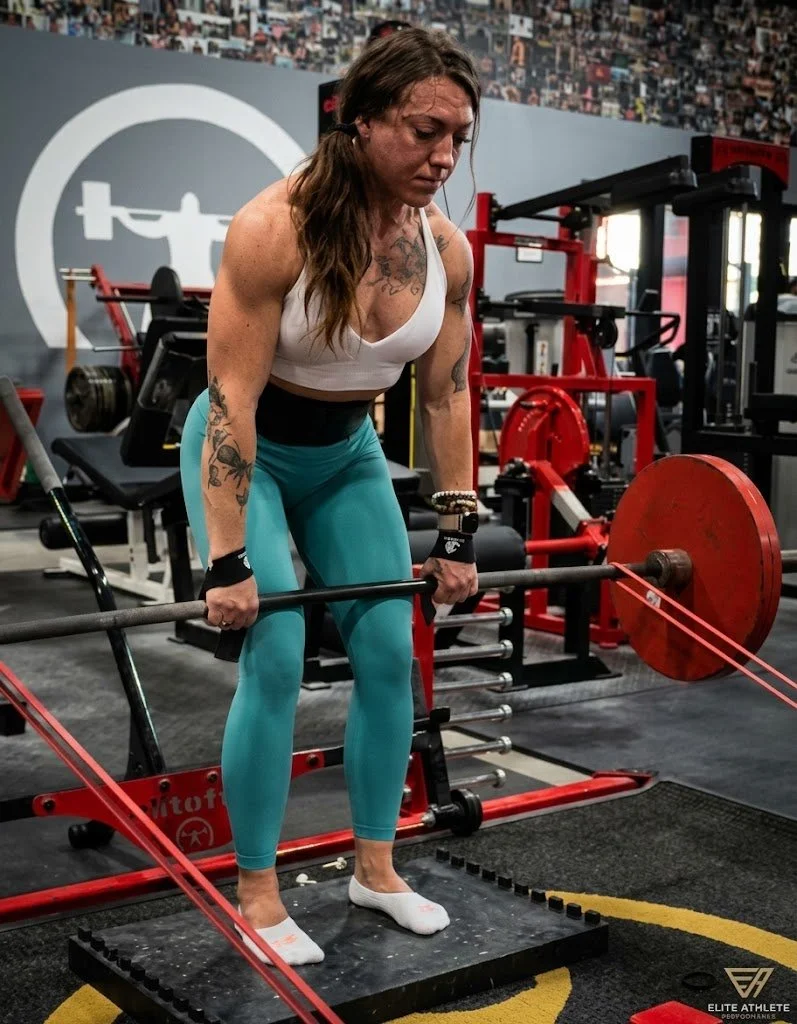
Strength covers up a lot. A strong lifter can grind through a soft brace, a foot that collapses, or a hip that shifts. For a while. Then the numbers stop moving, or something starts to hurt.
These are the five gaps I see most often in experienced lifters and athletes, with a quick way to check each one and what to do about it. None of them need you to stop training. They slot into the program you already run.
Your brace is built on a bad breath
Most lifters brace by sucking in a big chest breath and holding it. That locks the ribs up and leaves the bottom of the trunk soft, right where you need pressure most.
You lose tightness out of the hole, your ribs flare overhead, or your low back rounds near lockout.
Lie on your back, feet on a wall. Can you exhale slowly for 8 seconds or more with your ribs staying down?
Five 90/90 breaths before you train. Before each heavy rep, exhale fully, then breathe 360° into your belt.
Your feet are losing the floor
Under heavy load, small changes at the foot travel straight up into the knees and hips. A tripod that holds at 60% often falls apart at 90%.
Weight drifts to your toes in the squat, your heels peel up, or your knees cave as reps get heavy.
Film a moderate squat from behind and the side. Do your arches hold and does your weight stay on the tripod?
Warm up in flat shoes or barefoot. Add tempo squats at 60 to 70% with a tripod-foot cue on every rep.
One side is doing more of the work
Every lifter has a dominant side. When the gap gets big, the bar starts to tell you: it shifts, tilts, or twists. And it's usually the same side that aches.
Your hips shift in the squat, the bar tilts in the bench, or one side always gets sore first.
Balance on one leg for 30 seconds, eyes closed. Then compare reps on a split squat at the same weight, side to side.
Two single-leg or single-arm exercises a week. Start with your weaker side and match those reps on the other.
You're missing positions, not strength
If you can't own a position, you can't load it. Many lifters spend years stretching for depth or overhead range that's really limited by control, not tightness.
You can't hit depth without your pelvis tucking, or your overhead press turns into a standing incline.
Test your range, do the 2-minute reset (breathing plus glute bridges), then retest. If it improves, it's control.
Stop chasing the stretch. Add paused and tempo work at end range so your body trusts the position.
You train the same way every day
A fixed program assumes you show up the same every session. Experienced lifters are close enough to their limits that a bad night of sleep really matters.
Grinding PR attempts on tired days, or a cycle of heavy block, nagging injury, deload, repeat.
Score your sleep, stress, energy, and soreness before every session for two weeks. Compare it to how you lifted.
Set top sets by reps in reserve, not just percentages. Push on green days and pull back on red ones.
Small leaks don't matter at 135. At 405, they're where the aches come from.
Heavier loads amplify everything. Fixing the foundation isn't a detour from getting stronger. For most experienced lifters, it's the fastest way to the next PR.
Find your gap before you load it.
Run these before your next heavy block. Any "not yet" is your starting point. Want it on paper? The printable version includes a scorecard you can take to the gym.
I coach lifters. I am one, too.
I'm Amber Shields, a strength coach with an MS in Exercise Science, a CSCS, and a PhD in progress. I compete in powerlifting, and I've spent more than 8 years coaching athletes and lifters who want to keep pushing without breaking down.
Two ways to work on it together
Your FSI Movement Assessment plus a video breakdown of your squat, bench, and deadlift. You leave with a written fix list you can drop into your current program.
- Full movement assessment
- Technique review of your main lifts
- Prioritized fix list and warm-up
Training built around your lifts, your sport, and your aches. Start with the 2-week starter, or go straight into full-time coaching. In person or online.
- 2-week starter: FSI Movement Assessment plus 4 one-on-one sessions, $250
- Full-time Core or Premium coaching
- Continue within 7 days and your $250 goes toward your first 4 weeks
- Meet-day plan and attempt selection if you're competing
Not sure which gap is yours?
Start with a free consult. We'll talk through your training, what's stalled, and what's bugging you. No pressure.